Showing posts with label Speyside. Show all posts

Tuesday, 27 May 2014

Distillation Process of Black Dog Triple Gold Reserve

While I have been writing about tasting and enjoying my new favourite Scotch, the Black Dog Triple Gold Reserve blended whisky, I have been wondering the actual process that is followed in preparing the 'water of life'. While I was researching about the ways Scotch is prepared I got to know the following which I am sharing with you guys today.

Barley heating and grinding

Barley, is first soaked in water for a period of 2-3 days and left out to germinate. The enzymes turn starch into sugars, and these get converted into alcohol. When the malt begins to sprout, it is dried so that the germination is stopped. Peat was normally being used for drying in the past. Then, the dried malt is grinded, and hot water is added to it. The starch gets converted into fermentable sugars. Liquid is drained off and sugars are converted into alcohol due to the addition of yeast strains. The type of yeast differs from case to case. During the Washback, the yeast strains convert wort into a liquid called wash that has around 10% alcohol, this process goes on for a couple of days.

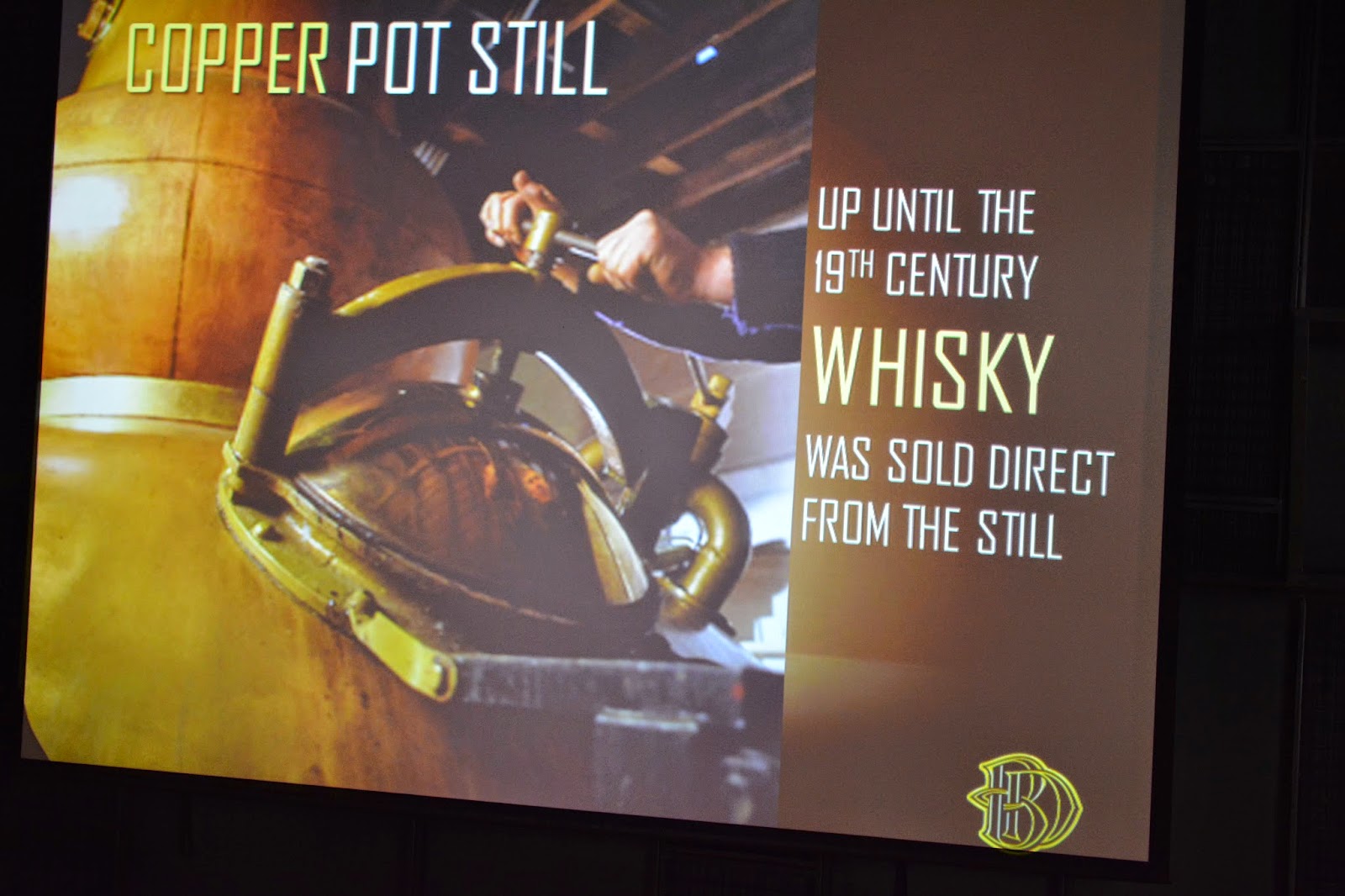
Copper Still

We have a liquid with approximately 10% alcohol, but need to increase the alcohol by volume(ABV) and this is possible with distillation. Did you know, that it is very difficult to get an alcohol percentage of above 15% with natural fermentation. Hence, the process of distillation had to be invented to get liquids of higher ABV. The Black Dog TGR, as all other Scotch is distilled in Pot Stills. The 'wash' is boiled in a copper still and distilled. As alcohol's boiling point is lower than water, it vapourises faster and the vapours get collected at the neck, and they cool down again to condense back to alcohol. To get a higher percentage of alcohol, the distillation process is repeated in smaller still called 'Spirit still'. These are done twice or thrice. Now this spirit has an ABV of around 70%.
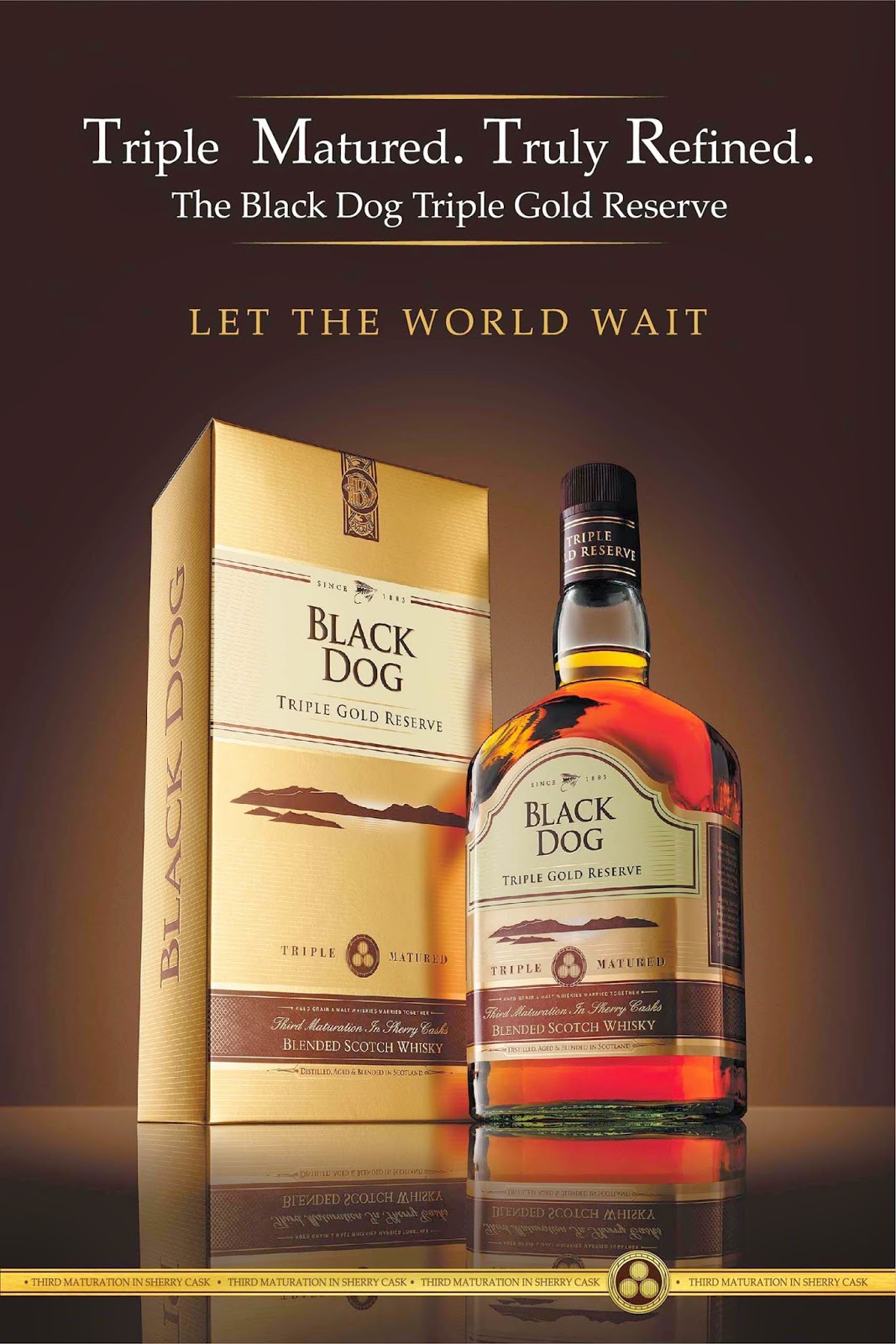


But wait, our TGR is not ready yet. It has to be matured, for at least 3 years. I will continue explaining the process in my next post soon. Till then, grab your favourite Scotch, the TGR and let the world wait while you savour the flavours in it.


Disclaimer: The above content is meant only for people above 25 years.

Monday, 19 May 2014

Black Dog TGR Scotch appreciation session by Andrew Skene - Final Part


Today, I am writing the final part of the Black Dog Triple Gold Scotch appreciation session. The event at Puma Social Club in Indiranagar addressed by Andrew Skene covered many aspects of Scotch making and tasting.


Continuing from where I left from my last post, let me describe the final stages in preparation of Scotch. Single malt whisky and grain whisky, after they are matured separately in bourbon casks, are blended and put into special oloroso Sherry casks. The Sherry casks are a tad expensive compared to American bourbon Casks. Also, it needs to be ensured that the Sherry casks are not dried up by the time they reach the maturation place. Some amount of Sherry wine is left inside the oloroso Sherry casks before it is shipped to Scotland. The third maturation phase of Black Dog Triple Gold Reserve is carried out in these Sherry casks sourced from Spain.


Quality is something each brand strives to keep up. Black Dog is known for its consistent quality and taste of its Scotch Whisky. But let me tell you, it is not at all an easy job to maintain the same taste and quality in all the bottles, especially when the malt and grain whiskies are coming from different sources. It is the art and perfection of Master Blenders that ensure the taste and aroma of the Whiskies are maintained within an acceptable range. Here we see master Blender performing some quality checks on the whisky before approving it for bottling process.


Each bottle of Black Dog TGR Scotch whisky has information about the barrels and years of maturation listed on the back. This is very useful in deciding your choice. A bottle of 750ml of Black Dog Triple Gold Reserve Blended Scotch Whisky will cost approximately Rs. 2300 in Karnataka. 

Disclaimer: The above content is meant only for people above 25 Years
Photo credits: Nivedith and Hrish

Sunday, 18 May 2014

Black Dog TGR Scotch appreciation session by Andrew Skene - Part 3


Barley grains
I was very eager to share this post with you guys. This post has the actual details how Barley from fields is turned into your favourite Black Dog Triple Gold Reserve blended Scotch Whisky.


Barley in Fields


Copper Pot Still
Barley is a crop grown in abundance in European belt, and its evidence is more felt in Scotland and Ireland. Here is a pic of Barley in its harvested format, but the cover is still visible. Andrew was quite excited to share with us every important detail in making of Whisky from barley. Barley is a soft grain, and its inner material is a white substance. Barley is mixed with water and mashed and fermented. Then fermented barley grains are heated in a copper pot, as Copper is one of the good conductors of heat. The mixture starts producing alcohol.


Raw spirit after Distillation


The alcohol produced should be trapped now. As alcohol is lighter in density compared to water, the alcohol vapours start to rise upwards. This process is carried in distilleries and alcohol vapours are cooled down to get pure alcohol. This liquid got after condensation is close to 80-90% pure. Andrew gave us a glass container which had the distilled alcohol liquid. As soon as I opened the cap, and took the neck of container near my nose, my nostrils experienced burning sensation. Imagine the state of people in those early days when maturation was not even discovered and people consumed whisky in this form. No doubt, maturation of whisky has meant it is received by a wider audience and the taste and nose of whisky is mostly derived from the wood used for Casks.


Bourbon and Oloroso sherry wood
The Black Dog Triple Gold Whisky has these same initial steps mentioned above. The malt and grain whiskies are matured in separate Bourbon casks, then these are married and matured in Sherry casks for a third round of maturation. You can see the different wood materials in the picture. Sherry casks add a lot of flavour and aroma to the TGR as the married liquid breathes through the wood all year long. As the wood expands and compresses due to different seasons, the spirit extracts the properties from the wood. Lets pour ourselves a drink of TGR and enjoy the flavors.

Disclaimer: The above content is meant only for people above 25 Years.
Photo Credits: Nivedith and Hrish

Saturday, 17 May 2014

Black Dog TGR Scotch appreciation session by Andrew Skene - Part 2


This is in continuation to http://gizntech.blogspot.in/2014/05/black-dog-tgr-scotch-appreciation.html Part - 1. Today I will take you through the reason and origin of Black Dog Scotch. Andrew started the session with a brief history of Black Dog as a brand and why the name Black Dog. He was carrying with him this Black Dog fly, which was a different experience for us.


Sir Walter Millard can be seen in the picture and in the backdrop you see an image from the late 1800s in India. Yes, this Mumbai, earlier known Bombay. Sir Walter Millard was a Scot and India was under the British rule those days. He left for Scotland in search of a perfect Whisky. A whisky, to be termed as Scotch must be produced and matured in Scotland, and no where else. His search ended in a blend created by James Mackinlay, of the second generation of the Leith Scotch Whisky blending family.


Black Dog Fly
Now, for those of us who do not know the art of Fly Fishing, here is picture. The Fly, is at an angle and acts a bait for the Fishes. Sir Walter Millard was very fond of this lazy style of Fishing. His favourite Fly, the Black Dog. Hence, he named the Scotch after his Fishing Fly, Black Dog. He used to fish in the Spey and Tay rivers in Scotland during early 19th Century. The fly is very attractive and it is indeed very sharp. Andrew had told us to be careful with its tip and avoid getting injured by mishandling. 


Next, came the actual Whisky making process, from the time Barley is cut in the fields till it is matured an bottled. I will cover these in my next post. Till then, enjoy your favourite Scotch, the Black Dog Triple Gold Reserve.

Disclaimer: The above content is meant only for people above 25 Years.

Photo Credits: Nivedith and Hrish

Friday, 16 May 2014

TGR and 4 Whisky Producing Scotland Regions


I have been writing a bit about the Black Dog Scotch, which is my favourite Whisky. When you tend to like something you also feel the need to know more about its history and process. Today I am sharing you some information I gathered regarding the different regions in Scotland that produce whiskies and how each region has its distinct taste. As far as producing whisky is considered, Scotland is divided into four main regions, namely, the Speyside, the Highlands, the Lowlands and the Islay region.

The highlands is a much larger region located centrally in Scotland. The Lowlands are located to the south of Highlands and share the borders with United Kingdom. The Speyside gets its name from the river Spey, that is located in the north regions of Scotland. Islay is a small island located to the west of mainland Scotland. Let me tell a bit about the characteristics of whiskies from each of these regions.


Four main Whisky producing Regions in Scotland
Speyside - The whiskies from the central region of Speyside, which hosts most of the distilleries in Scotland is that they have plenty of nose. There is a lot of variety in whiskies produced here.

Highlands - This is a very large area in central Scotland. The number of distilleries here, is less compared to the Speyside region. There's a wide variety in the climates experienced in this region and the whiskies tend to exhibit the same.

Lowlands - This region is located to the south of Scotland and shares it borders with England. The distilleries in Lowlands region are mostly located in the north areas. Light bodies of Single malt whiskies are the main whisky produce here.

Islay - This is a small island located a bit near to the westernmost part of mainland. The whiskies from this region exhibit the peaty style and smoky characteristics. Though a small region, Islay is a famous name when it comes to the subject of Scotch Whiskies.


The Black Dog Triple Gold Reserve is a blended Scotch Whisky. The single malt Whisky and grain whisky is matured in separate American Bourbon casks for a long time. Then these two whiskies are married and matured again in Sherry casks for some more time. The distinct taste and aroma to TGR is a contribution from both woods. TGR is one of the smoothest whiskies and the finish leaves you wanting a little bit more of it.

Disclaimer: The above content is meant only for people above 25 Years of Age.

Black Dog TGR Scotch appreciation session by Andrew Skene - Part 1


Black Dog's journey through 125+ years
The last weekend was a special one for me. I was very exited on being invited to interact with Andrew Skene, a scotch expert. It is always exciting to meet and learn about their fields from the experts themselves, and what more fun than having a Scotch expert in your town. Andrew was in Bangalore to guide us more through various topics associated with Black Dog and its newest arrival TGR, Triple Gold Reserve.

His session included the history of Black Dog, the naming of brand Black Dog, process of making a Scotch, from barley in fields to the bottling process. Importance of maturation and the choice of woods for maturation process. I wish to cover all these aspects as thoroughly as possible in a series of Blogs.


Andrew describing his origins
First, let me give you a brief description of our Scotch expert, Andrew Skene.

  • Aberdeen, a town in the heartland of Scotland's whisky producing region, is where Andrew comes from. He has always been an admirer of Scotch.
  • His expertise are Marketing & Branding and he is certified in Scotch whisky for sales and service. In 2003, Andrew felt the need to give impetus to Scotch in South Asia.
  • He setup Spirit of Scotland Pvt. Ltd in the year 2006 in Singapore, and has never looked backed since, organising Scotch campaigns, and hosting lots of tasting and appreciation sessions, like the one we had a chance to experience now.

"Water of Life"

Andrew started with the story of how the word "Whisky" came into place. It is an Anglicized name for "Usquebaugh" or the water of God in Scot. If translated, the word literally means 'water of life'. Now you must be acknowledging the fact how apt is the naming.

There's a lot to share about the evolution of Black Dog from its early days to the current day where its Triple Gold Reserve blended Scotch Whisky is ruling the charts. More info in future posts.

Disclaimer: The above content is meant for people above 25 Years of age.

Photo Credits: Nivedith and Hrish